
What we assess and treat:
- Urinary incontinence or leakage (stress and urge)
- Overactive bladder
- Real-time Ultrasound pelvic floor activation
- Pelvic floor exercise prescription
- Overactive pelvic floor requiring down training
- Pelvic pain (pain in the lower abdomen, vulva or vagina) or sexual pain
- Issues with sexual function
- Bowel issues or incontinence
- Prolapse
- Obstetric injuries
- Pelvic floor issues post menopause
- Post-op/ hysterectomy
- Difficulty emptying your bowel or bladder
- A flare-up of a previous pelvic floor injury from birth including bladder incontinence, pelvic floor muscle tears, prolapse, bowel incontinence, painful episiotomy/perineal scars
After giving birth, whether through vaginal delivery or C-section, and during menopause, our pelvic floor undergoes various changes—both physical and hormonal. These changes can impact our overall well-being. Therefore, a pelvic floor consultation can be immensely beneficial.
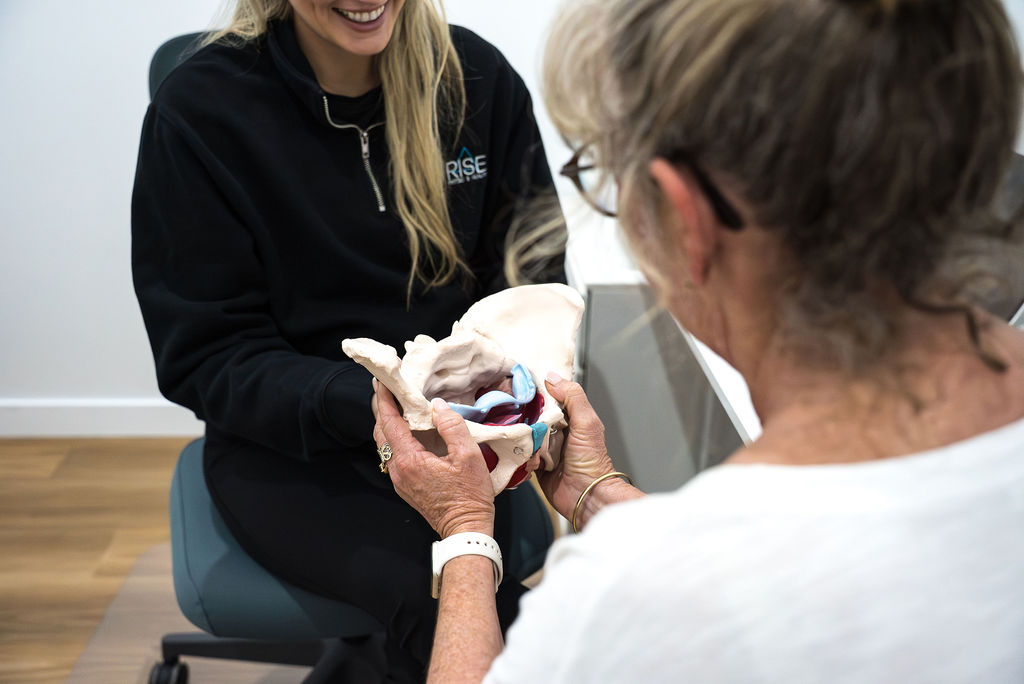
It may involve an anoperineal visual external examination to assess pelvic floor function. While this examination isn’t always necessary, it can provide valuable insights into maintaining pelvic health and addressing any issues that may arise.
Your women’s health physiotherapist will discuss this with you in depth if needed.
 3143 0772